Maintaining Two Relationships at Once
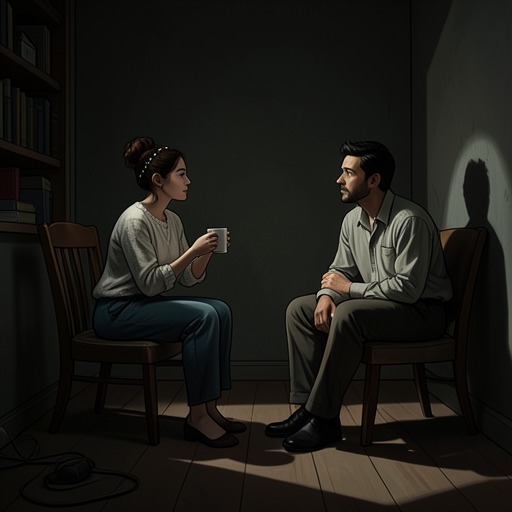
CEO's Beloved Honey GirlMaintaining Two Relationships at Once is one of the book’s most consequential relationship patterns. It describes the attempt to sustain competing romantic claims at the same time, whether through concealment, indecision, emotional dependence, strategic compromise, or an outright refusal to release one attachment before taking up another. The pattern repeatedly turns private desire into a public crisis: partners are forced to interpret evidence, defend their dignity, or choose between continued attachment and the need to survive. Its significance lies in the way it exposes love as entangled with marriage, reputation, family pressure, illness, and power.
Definition and Relational Structure
Maintaining Two Relationships at Once does not appear as a single, uniform act. In Su Qingrou’s confession, the condition is presented as a trap from which she cannot free herself. She acknowledges that she and Lin Yanche should never be together again, yet says that she cannot get rid of him, while he is willing to admit that he is maintaining two relationships at once rather than loosen his hold on her. The contradiction is central: the relationship is recognized as impossible, but recognition does not produce release. Emotional attachment operates as a continuing force even after the characters understand the moral and practical consequences.
The same pattern also appears through the language of replacement and succession. Lin Yanche bitterly treats Su Qingrou’s new relationship as proof that he has been officially relegated to the past. His anger does not come only from separation; it comes from the speed with which a former absolute attachment seems to have become an abandoned one. Su Qingrou answers that she still has to go on living rather than spend every day in tears. Her response frames movement forward as necessary self-preservation, while Lin Yanche reads it as betrayal. The dispute therefore turns on incompatible definitions of fidelity: one character measures loyalty by emotional continuity, while the other measures it by the ability to continue living after a relationship has broken.
Deception, Evidence, and Exposure
The pattern becomes especially volatile when it is concealed behind staged appearances. Su Xiangwan returns to the Jingshan villa and hears Su Xiangcheng telling Mo Beichen that he, Yang Chen, and Song Yuner have nothing to do with her and that she has never liked him. Lu Xun’s attention sharpens immediately when Song Yuner’s name is mentioned. The overheard exchange converts an invisible network of attachments into a problem of evidence: what had been private, denied, or emotionally ambiguous can suddenly be reconstructed from a voice behind a bedroom door.
The same logic governs Song Yuner’s later explanation of the night that threatens Su Xiangcheng’s marriage. She claims that she never stayed at Lin Yanche’s house and that Mo Beichen and the men with him did not touch her in the box; instead, she says she made a deal with Mo Beichen and secured their cooperation. She then presses Lu Xun about his physical reaction and asks why he did not want her. The scene reveals how the appearance of a relationship can be manufactured even when its stated facts are disputed. Desire, manipulation, and performance become difficult to separate, and the question is no longer merely who was faithful but who controlled the story that others were made to believe.
Song Yuner subsequently treats the encounter as an affair and addresses Su Xiangcheng with calculated lightness. She says that the two of them have disappointed her, attributes the situation to drinking and willfulness, and insists that she did not intend to ruin the marriage or make Lu Xun divorce his wife. Her explanation attempts to reduce a serious breach to temporary recklessness while simultaneously acknowledging its power to damage a formal union. The contrast between casual phrasing and marital consequence shows how Maintaining Two Relationships at Once depends on unequal interpretations: the person minimizing the event is not the person who must bear its public meaning.
Marriage, Jealousy, and Unequal Power
In the confrontation between Song Yuner and Lu Xun, divided attachment is inseparable from marital resentment. Song Yuner clings to Lu Xun and appeals to him as someone who will still help her, while also accusing him of having married a woman casually and of using that marriage to anger her. She presents herself as punished and abandoned, but Lu Xun responds with cold mockery and turns her complaint back against her. Their exchange is shaped by an older intimacy that has not disappeared, even though Lu Xun now occupies the position of a married man and Song Yuner occupies the position of the excluded former attachment.
The relationship pattern also operates through competition among women for recognition, protection, and emotional priority. After Lu Xun protects Song Yuner during a violent incident, the injury to his wrist is explained as the result of that protection. The account further emphasizes that Lin Yanche spent the entire night protecting Su Qingrou instead of responding to Song Yuner’s attempts to comfort him. Su Xiangcheng concludes that the result of the battle no longer matters because she has defeated Song Yuner. Her sense of victory is therefore relational rather than military: the decisive outcome is who receives protection and whose claim appears to prevail.
This competition is intensified by the institutional weight of marriage. Su Qingrou proposes that she and Jin Zhengnan hold a small engagement ceremony, mainly for the benefit of their two companies. The proposed engagement is not represented as purely private romance; it is also a corporate arrangement and a public shield against Lin Yanche. When Su Xiangcheng worries about Lin Yanche, Su Qingrou answers that they have a brother, invoking family protection as another resource in the struggle. A relationship that might otherwise be judged by affection alone is thus organized by company interests, family position, and the need to create a defensible social identity.
Trauma, Dependency, and the Cost of Entanglement
The book places divided relationships beside other forms of vulnerability, making emotional dependence appear as part of a broader pattern of insecure attachment. Su Qingrou’s distress is not abstract: Su Xiangcheng sees her silently weeping and notices deep and shallow kiss marks on her body. The physical marks make coercion, intimacy, and humiliation visible at once, while a photograph of Lin Yanche passionately embracing Song Yuner supplies a second, apparently contradictory image. The juxtaposition forces Su Xiangcheng to confront a relationship in which intimacy has become evidence against itself.
Su Xiangcheng’s own physical collapse shows how quickly relational crisis becomes bodily crisis. After sleeping without enough covering, she develops a fever, severe soreness, and profound weakness, then asks Manager Wu to buy antipyretic medicine. The fever is initially linked to an immediate physical cause, but the surrounding narrative repeatedly joins bodily vulnerability to emotional danger. Later, Su Xiangwan reaches an elevator while burning with fever and gradually losing consciousness; before touching the button, she faints and falls. These episodes do not prove that every illness is caused by romantic conflict, but they establish a recurring contrast between the characters’ effort to manage unstable relationships and the body’s refusal to remain controlled.
That contrast is answered by Lu Xun’s protective response. When Su Xiangcheng is frightened, he brings her hot milk, holds her, and reassures her that he has been there all along. His care offers temporary security, yet it also belongs to the novel’s larger pattern of protection as a form of power. The characters do not simply choose between lovers; they depend on people who can shelter them, defend them, or retaliate for them. Maintaining Two Relationships at Once is therefore sustained not only by desire but by unequal access to safety.
Disclosure, Memory, and Narrative Significance
The pattern is repeatedly connected to revelations that alter how earlier conduct is understood. Su Xiangcheng recalls that her grandfather said her mother had a terminal illness and left the family so as not to implicate them. She remembers drawing her parents holding her hands and then seeing her mother walk onto the balcony after looking at the drawing. This memory introduces the trauma of a mother’s suicide into the emotional architecture of later relationships. Abandonment is not merely a romantic event; it is part of a family history in which love, guilt, illness, and disappearance have already been fused.
Lu Xun contributes a different buried history when he explains that he was kidnapped at twelve, drugged by the kidnappers, and nearly lost his life. He says that the experience left him resistant to drugs and recalls that the girl killed alongside him was around Su Xiangcheng’s age. The disclosure reframes his later suspicion and control as responses shaped by an earlier assault, without erasing the harm those responses can cause. His past remains emotionally active even when he narrates it with an unwavering gaze, as though recounting someone else’s pain.
Taken together, these disclosures show why the book cannot treat divided attachment as a simple moral label. The characters’ choices are harmful and often manipulative, but they are also shaped by abandonment, fear, family obligations, physical danger, and the need for social cover. The recurring structure creates a chain of pursuit, concealment, exposure, and retaliation. It pushes lovers toward staged engagements, forces spouses to read photographs and overheard speech as proof, and converts protection into a contested sign of preference. Rather than resolving intimacy into a stable pair, the pattern keeps asking who has the right to claim another person, what marriage can actually guarantee, and whether survival requires abandoning one relationship before another can become legitimate.